Encephalitis
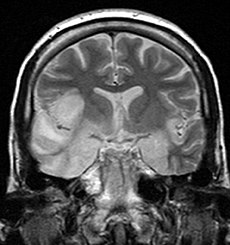
Encephalitis is an acute inflammation of the brain. Encephalitis with meningitis is known as meningoencephalitis. Symptoms include headache, fever, confusion, drowsiness, and fatigue. More advanced and serious symptoms include seizures or convulsions, tremors, hallucinations, and memory problems.
Cause
Viral
Main article: Viral encephalitis
Viral encephalitis can occur either as a direct effect of an acute infection, or as one of the sequelae of a latent infection. The most common causes of viral encephalitis are Rabies, Herpies Simplex, Polio, SSPE and PML.[1] Other causes include infection by flaviviruses such as St. Louis encephalitis or West Nile virus, or by Togaviridae such as Eastern equine encephalitis (EEE), Western equine encephalitis (WEE) or Venezuelan equine encephalitis (VEE).Bacterial and other
It can be caused by a bacterial infection, such as bacterial meningitis, spreading directly to the brain (primary encephalitis), or may be a complication of a current infectious disease syphilis (secondary encephalitis). Certain parasitic or protozoal infestations, such as toxoplasmosis, malaria, or primary amoebic meningoencephalitis, can also cause encephalitis in people with compromised immune systems. Lyme disease and/or Bartonella henselae may also cause encephalitis.Another cause is granulomatous amoebic encephalitis.
Diagnosis
Adult patients with encephalitis present with acute onset of fever, headache, confusion, and sometimes seizures. Younger children or infants may present irritability, poor appetite and fever.Neurological examinations usually reveal a drowsy or confused patient. Stiff neck, due to the irritation of the meninges covering the brain, indicates that the patient has either meningitis or meningoencephalitis. Examination of the cerebrospinal fluid obtained by a lumbar puncture procedure usually reveals increased amounts of protein and white blood cells with normal glucose, though in a significant percentage of patients, the cerebrospinal fluid may be normal. CT scan often is not helpful, as cerebral abscess is uncommon. Cerebral abscess is more common in patients with meningitis than encephalitis. Bleeding is also uncommon except in patients with herpes simplex type 1 encephalitis. Magnetic resonance imaging offers better resolution. In patients with herpes simplex encephalitis, electroencephalograph may show sharp waves in one or both of the temporal lobes. Lumbar puncture procedure is performed only after the possibility of prominent brain swelling is excluded by a CT scan examination. Diagnosis is often made with detection of antibodies in the cerebrospinal fluid against a specific viral agent (such as herpes simplex virus) or by polymerase chain reaction that amplifies the RNA or DNA of the virus responsible (such as varicella zoster virus).
Treatmen
Treatment is usually symptomatic. Reliably tested specific antiviral agents are few in number (e.g. acyclovir for herpes simplex virus) and are used with limited success in treatment of viral infection, with the exception of herpes simplex encephalitis. In patients who are very sick, supportive treatment, such as mechanical ventilation, is equally important. Corticosteroids (e.g. methylprednisolone) are used to reduce brain swelling and inflammation. Sedatives may be needed for irritability or restlessness.
Encephalitis lethargica
Main article: Encephalitis lethargica
Encephalitis lethargica is an atypical form of encephalitis which caused an epidemic from 1918 to 1930. Those who survived sank into a semi-conscious state that lasted for decades until the Parkinson's drug L-DOPA was used to revive those still alive in the late 1960s by Oliver Sacks.
There have been only a small number of isolated cases in the years since, though in recent years a few patients have shown very similar symptoms. The cause is now thought to be either a bacterial agent or an autoimmune response following infection.Encephalitis หมายถึงมีการอักเสบของเนื้อสมอง
การอักเสบอาจจะเกิดทั้งสมองหรือบางส่วนของเนื้อสมอง สาเหตุของสมองอักเสบมักจะเกิดจากไวรัสเช่น
เริม คางทูม หัดเยอรมัน ไข้สุกใส นอกจากนั้นยังเกิดจากยุงหรือไรกัดเช่น Japanese encephalitis
อาการของผู้ป่วยสมองอักเสบ ผู้เป็นไม่มากจะมีอาการ
ไข้
อ่อนเพลียไม่มีแรง
เจ็บคอ
คอแข็ง
อาเจียน
ปวดศีรษะ
สับสน
กระสับกระส่าย
ซึม
ปวดหัวเมื่อแสงจ้าๆ
สำหรับผู้ที่มีอาการมากได้แก่
ซึม ไม่ค่อยรู้สึกตัว
สับสนไม่รู้วันหรือกลางคืน จำคนไม่ได้
ชัก
ไข้สูง
ปวดศีรษะมาก
คลื่นไส้อาเจียน
มือสั่น
คอแข็ง
สาเหตุ สาเหตุของสมองอักเสบส่วนใหญ่เกิดจากเชื้อไวรัส การติดต่อโดยมากเกิดจากยุง ไรกัด เช่นโรคสมองอักเสบจากไวรัสสายพันธ์ยี่ปุ่น japaness encephalitis บางชนิดเกิดจากการที่สัตว์เช่นค้างคาวหรือสุนัขกัด
เช่นโรคหมาบ้า
ประเภทของการติดเชื้อแบ่งออกเป็น 2 ประเภทคือ
*ติดเชื้อครั้งแรก Primary encephalitis หมายถึงการติดเชื้อไวรัสเป็นครั้งแรกและเชื้อนั้นก็ทำให้เกิดสมองอักเสบ
มักจะมีการระบาดเป็นครั้งคราว เช่นไขสมองอักเสบสายพันธ์ญี่ปุ่น
*สมองอักเสบซึ่งเกิดจากเชื้อที่อยู่ในร่างกายเรียก Secondary (post-infectious) encephalitis เช่นสมองอักเสบจากเชื้อเริม

ไม่มีความคิดเห็น:
แสดงความคิดเห็น